Sunday, September 9, 2012

Friday, October 21, 2011

Faculty and students from the University of Southern Indiana participated in a research trip in the Dominican Republic from June 14 to 29, 2011. The group was composed by Dr. Manuel Apodaca-Valdez (Program director), Dr. Norma Rosas Mayen, and six students Spanish majors in the Department of Modern and Classical Languages: Chelsey Mullins, Monika Watten, Erin Schmitt, Ashley Elpers, Grisel Barajas, and Peter Willimas. Each participant accomplished an individual research project dealing with various aspects on the African influence in current culture and language of the Dominican Republic. The research trip included excursions to various towns and Bateys (plantations) including, Batey Libertad, Batey Cerro Gordo (near Santiago), the town of Dajabon in the border with Haiti, Santiago City, the 27 Charcos of Damajagua, and the beaches of Samana, and Puerto Plata.
See more pictures at:
https://picasaweb.google.com/manjes12/DominicanRepublicSummer2011#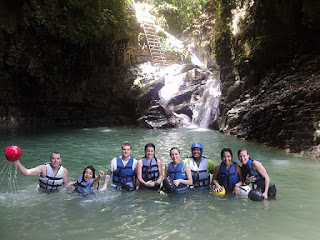
Wednesday, June 9, 2010
Abakua Dances in Cuba
VIDEO: http://www.youtube.com/watch?v=8OtDlqTyLU4&NR . Thanks to: maycarrion
Défilé ABAKUA http://www.dailymotion.com/video/x4dee5_defile-abakua_music Thanks to ritmacuba Pictutre by: Crispin Robinson
Rhythm rites
Vol.124, Issue 4 (July/August 2009)
Défilé ABAKUA http://www.dailymotion.com/video/x4dee5_defile-abakua_music Thanks to ritmacuba
Pictutre by: Crispin RobinsonRhythm rites
Vol.124, Issue 4 (July/August 2009)
Want to know more about Abakua?
Read: Ivor Miller's Voice of the Leopard: African Secret Societies and Cuba http://www.upress.state.ms.us/books/1147 Recomended!
Tuesday, May 25, 2010
Ethnotourism: An Economic Alternative for Marginalized Communities

Ethnotourism is a neologism encompassing both ethnic and tourism. It has been recently introduced to various African and Amerindian minority groups in South and Central America, especially in countries such as Bolivia, Ecuador, Colombia, Panama, and Honduras. Ethnotourism differs from ecotourism basically in agency direction. While ecotourism promotes "responsible travel to natural areas that conserve the environment and improves the well-being of local people" (International Ecotourism Society), ethnotourism, in addition to look for the well-being of the communities, aims to foster local agencies able to create their own touristic programs and facilities, without the intervention of external parts.
A good example of how ethnotourism works in an Afro-Latina American community is Palenque de San Basilio in Colombia. Considered as Intangible Patrimony of the World because of its unique culture and language, Palenque de San Basilio, located in the Montes de Maria, one hour from Cartagena de Indias, offers to the visitor numerous activities including guided tours, lively spectacles of Afro-Colombian dances and music, conversations with local prominent figures, such as boxers, singers, musicians, leaders and scholars. One agency in Palenque has adopted the term ethnotourism to define their own promotion of cultural activities. The team, led by Manuel Perez (Mané) has organized a dance and music troupes, guided tours, and observation of Palenquero language classes, the local Creole language currently in a process of revitalization at the local schools.
Ethnotourism might become a sustainable source of income for hundreds of native and marginalized communities in developing countries that struggle against loosing not only their jobs, but also traditions and languages devoured by globalization, which they cannot escape.
Ethnotourism my focus not only on protecting the environment, but also benefiting native people, in a trend named as community-based ethnotourism. In ethnotourism, rather than being passively observed by tourists only as exotic peoples, natives become active participants, promoters of their own culture, and main recipients of the economical benefit that tourism raise.
Ethnotourism my focus not only on protecting the environment, but also benefiting native people, in a trend named as community-based ethnotourism. In ethnotourism, rather than being passively observed by tourists only as exotic peoples, natives become active participants, promoters of their own culture, and main recipients of the economical benefit that tourism raise.
What is necessary to promote ethnotourism in Marginalized communities?
1. Each country should include in its Tourism Office agenda the promotion of ethnotourism at communities distinguished by its original cultural and ethnic values.
2. Local people should have the right to receive education and training on administration through workshops and courses that help to promote their culture and community values.
3. Allocate economic stimulus packages and grants to cultural groups and people interested in the promotion of local culture.
4. Keep continuous tracking of the development of each ethnotouristic group in order to evaluate its performance and correct misleading of resources.
More information on ethnotourism, visit:
http://blog.sustainabletravel.com/ecotourism_expands_into_ethnot.html
http://bigtravelweb.com/travel/2008/04/21/community-ecotourism-project-development-guidelines/
Tuesday, September 15, 2009
Colombia in the new era of globalization
Colombia, one of the countries more affected by guerilla and drug trafficking is currently in the process of recovering its original image as a beautiful and touristic country. For decades, Colombia has struggled against paramilitary and subversive groups that in numerous occasions decimated the native communities and displaced hundreds of peoples from their native lands, for drug dealers and guerillas be able to use that land for coca plantations. President Uribe, has received millions of dollars from the USA government to support the combat against drug dealers and guerilla groups. Also, Colombia has entered into globalization by becoming a part of the New Trade Agreement for Central and South America. It is obvious that this process will increase the circulation of global merchandises in the nation, and Colombia has to face the social inequalities that globalization brings. As it has been the case of Mexico after NAFTA, the breech between the rich and the poor enormously grows with globalization and neo-liberal politics reaching high levels of inequality; the same is happening now a days in Colombia just after few years of having started business with the richest countries of the globe.
However, questions remain : Will be the new trade agreement able to diminish violence in this lacerated country? Will globalization be able to decrease the level of poverty in the nation? Disenfranchised communities such as blacks and Amerindians will be able to become respected and supported for further development of their ethnic traditions and cultures?
However, questions remain : Will be the new trade agreement able to diminish violence in this lacerated country? Will globalization be able to decrease the level of poverty in the nation? Disenfranchised communities such as blacks and Amerindians will be able to become respected and supported for further development of their ethnic traditions and cultures?

School children studying palenquero language in San Basilio de Palenque, Colombia
Wednesday, July 29, 2009
Conversación con varios hombre del Palenque de San Basilio, quienes hablan sobre las necesidades materiales que tienen actualmente en su comunidad (mp3 file).
http://www.zshare.net/audio/63351834be2b1f83/
La Champeta colombiana de Ane Swing
En el Palenque de San Basilio, Colombia, 2008.

Champetas de ayer y hoy CD
Subscribe to:
Posts (Atom)